


Preparing a Loved One for a Move into Residential Housing
A move into residential housing can be a major transition. Preparation can help make the process smoother.
Moving into a residential home can be both exciting and stressful. Families can make the transition easier by preparing ahead of time and helping the individual understand what to expect.
Talk About the Move
Whenever possible, include the individual in conversations about the move.
Discuss the new environment, daily routines, house expectations, meals, activities, and opportunities for independence.
Allowing the person to ask questions can reduce uncertainty.
Gather Important Information
Families may be asked to provide:
Identification
Insurance information
Medication information
Current provider information
Benefit or income information
Treatment or assessment records
Emergency contacts
Requirements vary depending on the individual and residential setting.
Prepare Personal Belongings
Bring appropriate clothing, toiletries, personal items, and familiar belongings that make the new space feel comfortable.
Before move-in, ask the residence what items are provided and whether there are restrictions on certain belongings.
Allow Time for Adjustment
Even a positive move is a major change.
Some individuals adjust quickly while others need more time. Encourage communication while also allowing the resident to begin developing relationships and routines within the new home.
Stay Supportive Without Taking Over
Family involvement can be extremely valuable, but residential living is also an opportunity to strengthen independence.
Encourage your loved one to participate in routines, make appropriate choices, and develop confidence within the new environment.
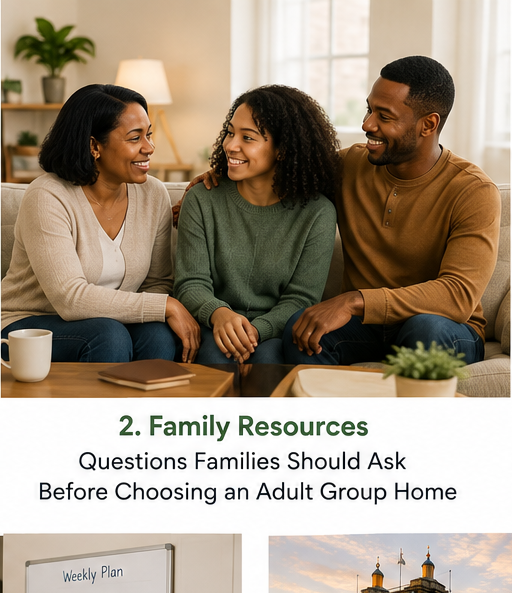
Questions Families Should Ask Before Choosing An Adult Group Home
Important questions families should ask when evaluating an adult group home for a loved one.
Confidence doesn’t always arrive with a bold entrance. Sometimes, it builds quietly, step by step, as we show up for ourselves day after day. It grows when we choose to try, even when we’re unsure of the outcome. Every time you take action despite self-doubt, you reinforce the belief that you’re capable. Confidence isn’t about having all the answers — it’s about trusting that you can figure it out along the way.
The key to making things happen isn’t waiting for the perfect moment; it’s starting with what you have, where you are. Big goals can feel overwhelming when viewed all at once, but momentum builds through small, consistent action. Whether you’re working toward a personal milestone or a professional dream, progress comes from showing up — not perfectly, but persistently. Action creates clarity, and over time, those steps forward add up to something real.
You don’t need to be fearless to reach your goals, you just need to be willing. Willing to try, willing to learn, and willing to believe that you’re capable of more than you know. The road may not always be smooth, but growth rarely is. What matters most is that you keep going, keep learning, and keep believing in the version of yourself you’re becoming.