

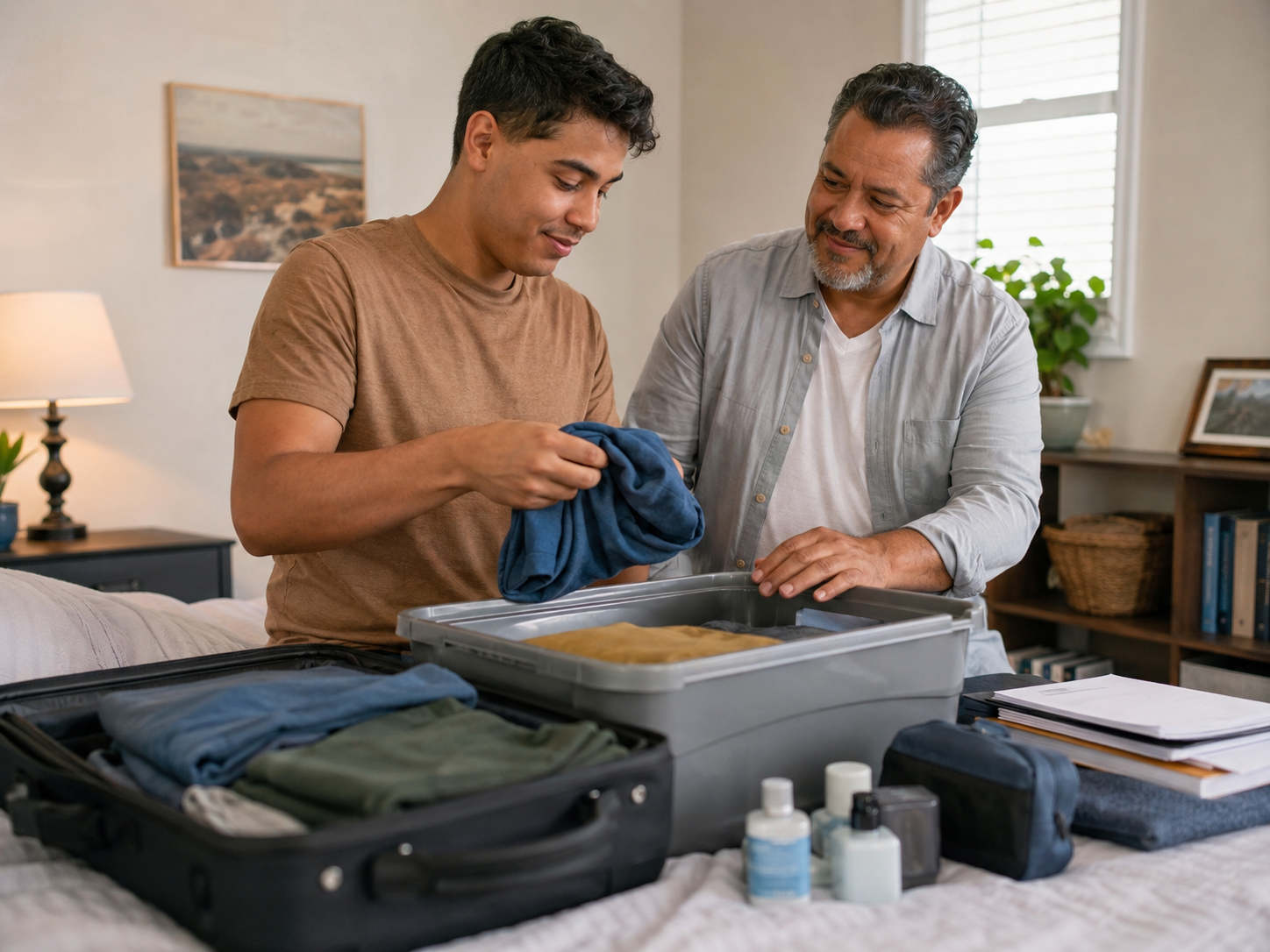
Why Daily Routines Matter in Supportive Residential Living
Daily routines provide more than structure. They can create opportunities to build skills, confidence, and independence.
Consistency can be an important part of successful residential living.
Daily routines help residents know what to expect while providing repeated opportunities to practice everyday skills.
Creating Predictability
Regular schedules for meals, medications, hygiene, appointments, activities, and household responsibilities can reduce confusion and help residents organize their day.
Developing Responsibility
Residents may participate in tasks such as maintaining their room, completing household responsibilities, preparing for appointments, and managing personal belongings.
The goal is to encourage participation rather than automatically doing everything for the individual.
Strengthening Independence
Skills often improve through repetition.
Something that initially requires frequent reminders may eventually require less support as the person becomes more comfortable and confident.
Supporting Individual Goals
Daily routines should still allow room for individual preferences, interests, and goals.
Structure works best when it supports the individual rather than unnecessarily limiting independence.
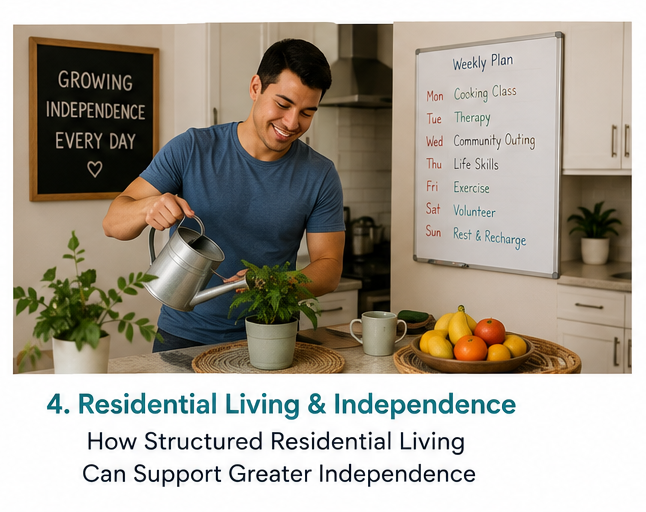
How Structured Residential Living Can Support Greater Independence
Learn how structure, life skills, community participation, and supportive services can encourage greater independence.
Structure and independence may sound like opposites, but they can work together.
For many adults, having a predictable residential environment can provide stability while creating opportunities to practice everyday skills and become more independent over time.
Creating Consistent Daily Routines
Consistent routines may help residents develop greater confidence and responsibility in areas such as:
Personal hygiene
Meals
Medication routines
Appointments
Household responsibilities
Recreation
Community activities
The goal is not simply to complete tasks for residents, but to encourage them to participate as much as possible.
Developing Daily Living Skills
Structured residential living can provide opportunities to strengthen practical skills such as:
Maintaining personal belongings
Cleaning and organizing living areas
Preparing for appointments
Making appropriate choices
Participating in meal routines
Following household expectations
Managing daily schedules
These everyday experiences can contribute to greater confidence and independence.
Community Participation
Independence also includes meaningful participation in the community.
Depending on individual needs and goals, community involvement may include:
Shopping
Recreational activities
Exercise
Medical appointments
Social activities
Volunteer opportunities
Community events
DODD and Medicaid Waiver Services
Walker Wellness Homes staff includes independent providers who may deliver authorized DODD and Medicaid waiver services to eligible individuals.
Services may include:
Homemaker Personal Care (HPC)
Support with activities related to daily living, personal care, household responsibilities, community participation, and individualized goals.
Participant-Directed HPC
HPC services provided according to the individual's authorized service plan while supporting greater participant involvement in how services are delivered.
Non-Medical Transportation (NMT)
Transportation services for eligible individuals when authorized through the individual's waiver plan.
Home Delivered Meals
Meal services for eligible individuals when authorized through the appropriate waiver or service plan.
Eligibility and authorized services are determined through the appropriate Medicaid or DODD process and the individual's approved service plan.
Supporting Meaningful Independence
The goal of residential and waiver support is to help individuals participate in their own lives as fully as possible.
Walker Wellness Homes emphasizes stability, personal choice, daily living skills, community participation, and meaningful independence.