


What to Expect During an Adult Residential Admission
Understanding the admission process ahead of time can make residential placement easier for residents and families.
Once a residential placement is approved, the focus shifts from evaluation to preparing for a successful move.
Final Documentation
Before admission, the residence may request final documentation such as medication information, benefit information, identification, emergency contacts, and provider records.
Review of Expectations
Residents should receive information about house expectations, meals, routines, visitors, community activities, and other important policies.
Moving In
Residents bring their approved belongings and begin settling into their new environment.
Meeting staff and understanding basic routines can help reduce anxiety during the first few days.
Establishing a Routine
The first weeks are often focused on helping the resident learn household routines, build relationships, and understand expectations.
Adjustment takes time, and communication among the resident, family, case manager, and residential staff can be particularly useful during this period.

Residential Housing vs. Waiver Services: Understanding the Difference
Residential housing and waiver services can work together, but they are not the same service.
Families often hear terms such as residential housing, Medicaid waiver, DODD services, and HPC during the placement process.
These services may complement one another, but they are not necessarily the same thing.
Residential Housing
Residential housing provides the individual's living environment.
Depending on the residence, housing may include room, meals, supervision, structured routines, household support, and other residential services.
Waiver Services
Eligible individuals may also have authorized services through Medicaid or developmental-disability waiver programs.
Examples may include:
Homemaker Personal Care
Participant-Directed HPC
Non-Medical Transportation
Home Delivered Meals
Services depend on eligibility and the individual's authorized service plan.
Walker Wellness Homes
Walker Wellness Homes provides residential housing, and staff includes independent providers who may deliver authorized DODD and Medicaid waiver services to eligible individuals.
Residential placement does not automatically create waiver eligibility or authorization.
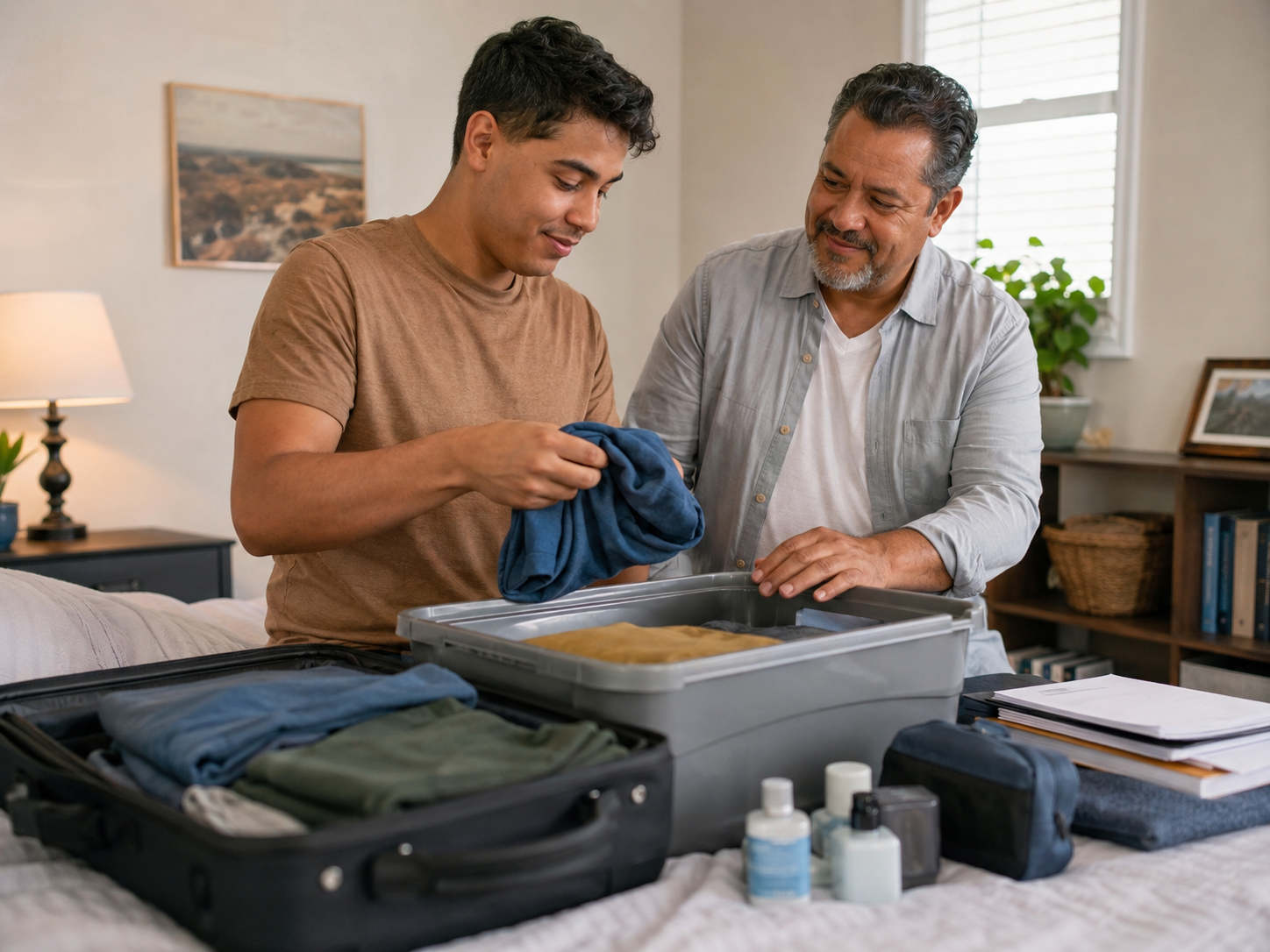
Why Daily Routines Matter in Supportive Residential Living
Daily routines provide more than structure. They can create opportunities to build skills, confidence, and independence.
Consistency can be an important part of successful residential living.
Daily routines help residents know what to expect while providing repeated opportunities to practice everyday skills.
Creating Predictability
Regular schedules for meals, medications, hygiene, appointments, activities, and household responsibilities can reduce confusion and help residents organize their day.
Developing Responsibility
Residents may participate in tasks such as maintaining their room, completing household responsibilities, preparing for appointments, and managing personal belongings.
The goal is to encourage participation rather than automatically doing everything for the individual.
Strengthening Independence
Skills often improve through repetition.
Something that initially requires frequent reminders may eventually require less support as the person becomes more comfortable and confident.
Supporting Individual Goals
Daily routines should still allow room for individual preferences, interests, and goals.
Structure works best when it supports the individual rather than unnecessarily limiting independence.

What Information Helps Speed Up a Residential Referral
Providing accurate information early can make the residential referral process more efficient for everyone involved.
Residential providers need enough information to determine whether they can appropriately support the person being referred.
Providing clear information early can reduce unnecessary delays.
Basic Information
Include the individual's age, current living situation, county, contact information, and desired placement timeframe.
Daily Support Needs
Clearly describe whether assistance is needed with:
Personal care
Medications
Meals
Household routines
Mobility
Community participation
Transportation
Safety and supervision
Behavioral and Mental Health Information
Residential providers should receive an accurate picture of current needs and concerns.
This may include behavioral health diagnoses, recent hospitalizations, substance-use concerns, safety issues, and current treatment providers when applicable.
Funding Information
If known, provide information about Medicaid, Medicare, Social Security benefits, RSS, county funding, or private payment.
If funding is still being established, communicate that as well.
Current Documentation
Helpful records may include diagnostic assessments, treatment plans, medication lists, insurance information, benefit verification, and discharge documentation.
Complete information allows residential providers to make more informed placement decisions.

Preparing a Loved One for a Move into Residential Housing
A move into residential housing can be a major transition. Preparation can help make the process smoother.
Moving into a residential home can be both exciting and stressful. Families can make the transition easier by preparing ahead of time and helping the individual understand what to expect.
Talk About the Move
Whenever possible, include the individual in conversations about the move.
Discuss the new environment, daily routines, house expectations, meals, activities, and opportunities for independence.
Allowing the person to ask questions can reduce uncertainty.
Gather Important Information
Families may be asked to provide:
Identification
Insurance information
Medication information
Current provider information
Benefit or income information
Treatment or assessment records
Emergency contacts
Requirements vary depending on the individual and residential setting.
Prepare Personal Belongings
Bring appropriate clothing, toiletries, personal items, and familiar belongings that make the new space feel comfortable.
Before move-in, ask the residence what items are provided and whether there are restrictions on certain belongings.
Allow Time for Adjustment
Even a positive move is a major change.
Some individuals adjust quickly while others need more time. Encourage communication while also allowing the resident to begin developing relationships and routines within the new home.
Stay Supportive Without Taking Over
Family involvement can be extremely valuable, but residential living is also an opportunity to strengthen independence.
Encourage your loved one to participate in routines, make appropriate choices, and develop confidence within the new environment.

How to Know When Adult Residential Placement May Be Appropriate
How to Know When Adult Residential Placement May Be Appropriate
Deciding whether an adult may benefit from residential placement is rarely based on one issue alone. Families, case managers, and other professionals often begin exploring residential options when an individual is having difficulty maintaining stability or completing everyday routines independently.
Difficulty Maintaining Daily Routines
Structured residential living may be worth considering when an individual frequently struggles with personal hygiene, meals, medications, appointments, household responsibilities, or maintaining a consistent daily schedule.
The appropriate level of support will vary from person to person.
Increasing Need for Supervision
Some adults may live successfully with limited assistance, while others benefit from more structure and supervision.
Residential placement may be considered when the individual's existing environment no longer provides the level of support needed to maintain safety, stability, and everyday functioning.
Repeated Housing Instability
Frequent moves, homelessness, conflict within the current residence, or difficulty maintaining independent housing can also lead families and professionals to explore structured residential options.
Stable housing can create an environment where individuals can focus on routines, community participation, and personal goals.
Consider the Whole Person
Residential placement should never be based solely on diagnosis.
The individual's strengths, needs, preferences, level of independence, safety considerations, services, and ability to live successfully with others should all be considered.
Need Help Exploring Residential Placement?
Walker Wellness Homes welcomes inquiries from families and professionals seeking adult residential housing in Greater Cincinnati.
Understanding Residential Housing and Waiver Services in Ohio
Understand the difference between residential housing and Medicaid or DODD waiver services available to eligible Ohio residents.
Understanding Residential Housing and Waiver Services in Ohio
Families and professionals often encounter several different programs when searching for residential housing and support services in Ohio.
One of the most important distinctions to understand is that residential housing and Medicaid or DODD waiver services are not necessarily the same thing.
Understanding that difference can make the referral and placement process easier to navigate.
What Is Residential Housing?
Residential housing provides the individual's living environment.
Depending on the residence, services may include:
Room and board
Meals
Daily structure
Supervision
Household support
Community integration
Assistance maintaining routines
Specific residential services vary by provider and setting.
What Are Medicaid and DODD Waiver Services?
Eligible individuals may receive services authorized through Medicaid or Ohio developmental disability waiver programs.
These services are based on the individual's eligibility, assessed needs, and approved service plan.
Examples may include:
Homemaker Personal Care
Participant-Directed Homemaker Personal Care
Non-Medical Transportation
Home Delivered Meals
Other approved community-based supports
What Is Homemaker Personal Care?
Homemaker Personal Care, commonly referred to as HPC, may provide assistance with activities that help eligible individuals live successfully in their homes and communities.
Supports may involve daily living skills, personal care, household routines, community activities, and other authorized goals.
What Is Non-Medical Transportation?
Non-Medical Transportation, or NMT, can provide transportation for eligible waiver participants when the service is authorized through the individual's plan.
The purpose of NMT is to support access to approved community activities and services.
Who Determines Waiver Eligibility?
Residential providers do not determine Medicaid or DODD waiver eligibility.
Eligibility and authorized services are determined through the appropriate state, county, Medicaid, DODD, SSA, care-management, or other responsible entity depending on the program.
Because program requirements can change, individuals, families, and providers should verify current requirements with the appropriate agency.
How Walker Wellness Homes Can Help
Walker Wellness Homes provides adult residential housing and also has staff who serve as independent providers for authorized DODD and Medicaid waiver services.
If you are considering residential placement and are unsure where to begin, our team can explain our residential services, referral process, and the information that may be needed to explore placement.
Contact Walker Wellness Homes to learn more about residential options and current availability.
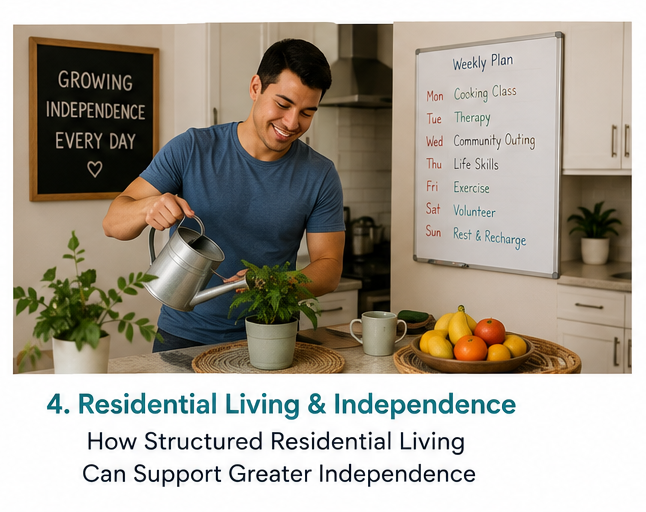
How Structured Residential Living Can Support Greater Independence
Learn how structure, life skills, community participation, and supportive services can encourage greater independence.
Structure and independence may sound like opposites, but they can work together.
For many adults, having a predictable residential environment can provide stability while creating opportunities to practice everyday skills and become more independent over time.
Creating Consistent Daily Routines
Consistent routines may help residents develop greater confidence and responsibility in areas such as:
Personal hygiene
Meals
Medication routines
Appointments
Household responsibilities
Recreation
Community activities
The goal is not simply to complete tasks for residents, but to encourage them to participate as much as possible.
Developing Daily Living Skills
Structured residential living can provide opportunities to strengthen practical skills such as:
Maintaining personal belongings
Cleaning and organizing living areas
Preparing for appointments
Making appropriate choices
Participating in meal routines
Following household expectations
Managing daily schedules
These everyday experiences can contribute to greater confidence and independence.
Community Participation
Independence also includes meaningful participation in the community.
Depending on individual needs and goals, community involvement may include:
Shopping
Recreational activities
Exercise
Medical appointments
Social activities
Volunteer opportunities
Community events
DODD and Medicaid Waiver Services
Walker Wellness Homes staff includes independent providers who may deliver authorized DODD and Medicaid waiver services to eligible individuals.
Services may include:
Homemaker Personal Care (HPC)
Support with activities related to daily living, personal care, household responsibilities, community participation, and individualized goals.
Participant-Directed HPC
HPC services provided according to the individual's authorized service plan while supporting greater participant involvement in how services are delivered.
Non-Medical Transportation (NMT)
Transportation services for eligible individuals when authorized through the individual's waiver plan.
Home Delivered Meals
Meal services for eligible individuals when authorized through the appropriate waiver or service plan.
Eligibility and authorized services are determined through the appropriate Medicaid or DODD process and the individual's approved service plan.
Supporting Meaningful Independence
The goal of residential and waiver support is to help individuals participate in their own lives as fully as possible.
Walker Wellness Homes emphasizes stability, personal choice, daily living skills, community participation, and meaningful independence.

What Case Managers Should Know Before Making a Residential Referral
A practical guide to help case managers and referral professionals prepare for successful residential placement.
Case managers, social workers, behavioral health professionals, discharge planners, and community providers often play an important role in helping individuals identify appropriate residential housing.
Providing clear information at the beginning of the referral process can help the residential provider determine whether a placement may be appropriate.
Begin Residential Planning Early
When possible, residential planning should begin before housing becomes an emergency.
Starting early allows additional time to:
Identify appropriate residential options
Gather necessary documentation
Clarify funding
Coordinate medications
Communicate with providers
Plan transportation and community supports
Address potential barriers to placement
Clearly Describe the Individual's Support Needs
Residential providers need an accurate understanding of how the individual functions on a day-to-day basis.
Helpful information may include:
Personal-care needs
Medication support needs
Mobility
Behavioral concerns
Community-safety needs
Communication abilities
Daily living skills
Substance-use concerns
Level of supervision required
Providing complete and accurate information helps determine whether the residence can appropriately meet the individual's needs.
Provide Current Documentation When Available
Helpful records may include:
Diagnostic assessment
Current treatment plan
Medication list
Insurance information
Income or benefit verification
TB screening
Discharge paperwork
Case manager and provider information
The specific documentation required may vary depending on the individual and funding source.
Collaboration Is Important
Successful residential placement often involves communication between the individual, case manager, residential provider, family, and community treatment team.
Each provider has a different role, but coordinated communication can support greater stability and continuity of care.
Refer Someone to Walker Wellness Homes
Walker Wellness Homes welcomes referrals from case managers, social workers, hospitals, behavioral health providers, community agencies, and families.
Contact us or submit a referral to discuss residential needs and current placement options.

How the Adult Residential Placement Process Works
Learn what to expect during the adult residential referral and placement process, from the initial inquiry through admission.
How the Adult Residential Placement Process Works
Finding the right residential setting for yourself or a loved one can feel overwhelming, especially when you are unsure where to begin. Understanding the placement process can make the experience easier for families, individuals, case managers, social workers, and other professionals involved in the referral.
At Walker Wellness Homes, the process begins with learning more about the individual and determining whether our residential setting may be appropriate for their needs.
Starting With a Referral
A residential referral may come from a family member, case manager, social worker, behavioral health professional, hospital, discharge planner, community agency, or another person involved in the individual's care.
Helpful information during the initial referral may include:
Current living situation
Reason placement is being requested
Level of supervision needed
Mental health or developmental needs
Medication information
Current providers and case management
Funding or benefit information
Desired timeframe for placement
You do not necessarily need to have every document available before making the initial inquiry.
Understanding Residential Support Needs
Every individual has different strengths, abilities, and support needs.
During the referral process, it may be important to understand whether the individual needs assistance with areas such as:
Daily routines
Personal hygiene
Medication self-administration
Meals
Household responsibilities
Community participation
Transportation
Appointment reminders
Safety and supervision
This information helps determine whether the residential environment may be an appropriate fit.
Gathering Documentation
Depending on the individual and funding source, additional documentation may be requested.
Examples may include:
Diagnostic assessment
Treatment plan
Medication list
Insurance information
Income or benefit verification
TB screening
Case manager information
Relevant discharge documentation
Determining Whether Placement Is Appropriate
Residential placement should involve more than simply finding an available room.
Consideration should be given to the individual's support needs, level of independence, safety, current services, funding, and ability to live successfully within the residential environment.
If the residential setting appears appropriate and suitable accommodations are available, the admission process can proceed.
Looking for Residential Placement?
Walker Wellness Homes welcomes inquiries from families and professionals seeking structured adult residential housing in Greater Cincinnati.
Contact us to learn more about our residential services, referral process, admission requirements, and current availability.
Questions Families Should Ask Before Choosing An Adult Group Home
Important questions families should ask when evaluating an adult group home for a loved one.
Confidence doesn’t always arrive with a bold entrance. Sometimes, it builds quietly, step by step, as we show up for ourselves day after day. It grows when we choose to try, even when we’re unsure of the outcome. Every time you take action despite self-doubt, you reinforce the belief that you’re capable. Confidence isn’t about having all the answers — it’s about trusting that you can figure it out along the way.
The key to making things happen isn’t waiting for the perfect moment; it’s starting with what you have, where you are. Big goals can feel overwhelming when viewed all at once, but momentum builds through small, consistent action. Whether you’re working toward a personal milestone or a professional dream, progress comes from showing up — not perfectly, but persistently. Action creates clarity, and over time, those steps forward add up to something real.
You don’t need to be fearless to reach your goals, you just need to be willing. Willing to try, willing to learn, and willing to believe that you’re capable of more than you know. The road may not always be smooth, but growth rarely is. What matters most is that you keep going, keep learning, and keep believing in the version of yourself you’re becoming.